
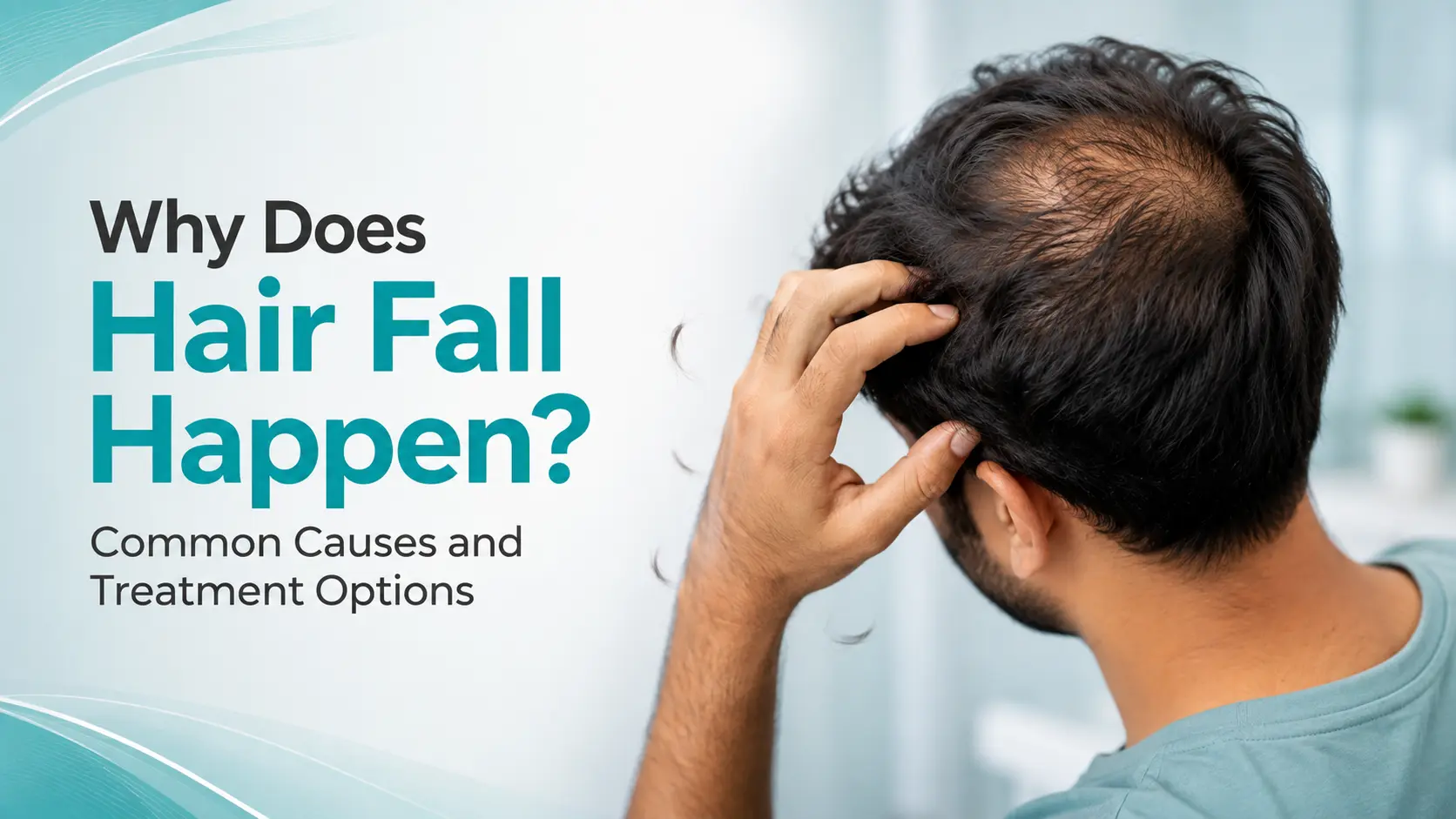
Introduction
Finding a few strands of hair on your pillow, in the shower drain, or on your hairbrush is completely normal. Hair grows, rests, and sheds in cycles, and losing some hair every day is simply part of that natural process. But when shedding becomes noticeably heavier, more frequent, or seems to be leading to visible thinning, it’s natural to wonder why does hair fall happen and whether something more is going on.
Increased or persistent hair fall can be concerning because it may point to an underlying cause — anything from temporary stress to a nutritional gap to a medical condition. The good news is that in most cases, hair fall has an identifiable cause, and understanding that cause is the first step toward figuring out what, if anything, needs to be done about it. This guide walks through the common causes of hair fall, how much shedding is considered typical, when it’s worth seeking professional input, and what treatment options are commonly discussed.
Why Does Hair Fall Happen?
Hair grows in cycles: a growth phase, a short transitional phase, and a resting phase after which the hair sheds and a new strand eventually takes its place. At any given time, most of the hair on your scalp is in the growth phase, while a smaller percentage is resting or shedding. Hair fall happens when this balance is disrupted — either because more hairs than usual shift into the shedding phase at once, or because the growth phase itself is shortened or disrupted over time.
Broadly, hair loss falls into a few categories:
- Temporary shedding, often triggered by stress, illness, or a nutritional or hormonal change, where hair typically grows back once the trigger resolves.
- Progressive thinning, such as hereditary pattern hair loss, which tends to develop gradually over months or years.
- Hair loss linked to an underlying medical or scalp condition, where treating the condition is usually central to managing the hair loss.
- Hair loss caused by external damage, such as tight hairstyles, harsh styling practices, or repeated pulling.
Because these categories can look similar on the surface but need very different approaches, identifying which one applies to your situation matters more than trying to treat the symptom alone.
Common Causes of Hair Fall
Hereditary or Pattern Hair Loss
Also known as androgenetic alopecia, this is one of the most common causes of hair loss in both men and women. It tends to run in families and typically develops gradually, often presenting as a receding hairline or thinning at the crown in men, and diffuse thinning at the crown or part line in women.
Hormonal Changes
Hormonal shifts — during pregnancy, after childbirth, during menopause, or due to conditions like polycystic ovary syndrome (PCOS) — can affect the hair growth cycle and lead to increased shedding for a period of time.
Nutritional Deficiencies
Hair follicles need adequate protein, iron, zinc, and certain vitamins to function normally. Restrictive diets, sudden weight loss, or deficiencies such as low iron or vitamin D levels can contribute to hair thinning in some individuals.
Stress and Illness
Significant physical or emotional stress, major surgery, high fever, or illness can push a larger-than-usual number of hair follicles into the shedding phase a few months later — a pattern often referred to as telogen effluvium. This type of shedding is usually temporary.
Thyroid and Other Medical Conditions
Both an underactive and an overactive thyroid can affect hair growth. Other medical conditions, including certain autoimmune conditions, may also play a role in hair loss and are worth discussing with a doctor if suspected.
Certain Medications
Some medications — including certain treatments for blood pressure, depression, arthritis, and cancer, among others — list hair loss or shedding as a possible side effect. Anyone concerned about a medication’s effect on their hair should speak with their prescribing doctor rather than stopping treatment on their own.
Scalp Conditions
Dandruff, fungal infections, psoriasis, or other inflammatory scalp conditions can contribute to hair fall, particularly if the scalp is itchy, scaly, or inflamed.
Poor Hair-Care Practices
Excessive heat styling, harsh chemical treatments, frequent coloring, and rough handling of wet hair can weaken hair strands over time and contribute to breakage that may resemble hair fall.
Tight Hairstyles or Repeated Hair Pulling
Hairstyles that pull tightly on the scalp — such as tight braids, ponytails, or extensions — can lead to a type of hair loss called traction alopecia if continued over long periods. Habitual hair pulling can also damage follicles over time.
Sudden Changes in Diet or Weight
Crash diets, bariatric surgery, or rapid, significant weight loss can trigger temporary shedding, often related to the nutritional shifts and physical stress involved.
Age-Related Changes
As people age, hair growth naturally slows, and hair strands can become finer. This is a normal part of aging rather than a disease process, though it can still be a source of concern for many people.
How Much Hair Shedding Is Normal?
It’s common to shed hair every day as part of the natural growth cycle, and the exact amount varies from person to person depending on factors like hair density, hair length, and the season. Rather than fixating on a specific number, it’s more useful to pay attention to changes in your own pattern — for example, if shedding has clearly increased compared to what’s typical for you, if you’re noticing thinner ponytails or more visible scalp, or if hair loss feels sudden rather than gradual. These kinds of changes are generally more meaningful than any single daily count.
When Should You See a Doctor or Hair Specialist?
Occasional shedding usually doesn’t need medical attention, but certain signs suggest it may be worth having a professional take a look:
- A sudden or dramatic increase in shedding
- Noticeable overall thinning of the hair
- A receding hairline that seems to be progressing
- Bald patches, especially if they appear suddenly or in a distinct shape
- Scalp itching, scaling, redness, or inflammation
- Hair loss occurring alongside other unexplained symptoms, such as fatigue, weight changes, or skin changes
- Hair loss that continues or worsens over several months despite basic care
None of these signs point to a single diagnosis on their own — they’re simply indicators that a proper evaluation could help clarify what’s happening.
How Is the Cause of Hair Fall Evaluated?
Evaluating hair fall typically starts with a detailed medical history, including questions about diet, stress, recent illnesses, medications, family history, and hair-care habits. This is usually followed by a physical examination of the scalp and hair, which can help distinguish between different patterns of hair loss.
Depending on what’s suspected, a doctor may also recommend blood tests — for example, to check thyroid function, iron levels, or vitamin levels — or, less commonly, a scalp biopsy in cases where the cause isn’t clear from history and examination alone. The specific evaluation depends entirely on the individual case, which is why self-diagnosing based on internet research alone isn’t usually reliable.
Treatment Options for Hair Fall
There isn’t a single treatment that works for every type of hair fall, because the right approach depends on the underlying cause. Broadly, options that may be considered include:
- Lifestyle and nutritional correction, such as addressing a diagnosed deficiency or adjusting a restrictive diet, where relevant.
- Treating an underlying medical or scalp condition, such as managing a thyroid disorder or treating a scalp infection.
- Medications, when medically appropriate, which a doctor can prescribe based on the diagnosed cause.
- Procedures or regenerative hair treatments, which may be considered in certain cases, typically after an underlying cause has been assessed.
It’s worth being cautious of any product or service that promises guaranteed regrowth or a one-size-fits-all fix — hair fall treatment is generally more effective when it’s tailored to the individual’s diagnosis rather than applied generically.
Hair Treatments Such as PRP, GFC, QR678 NEO and Exosomes
You may come across terms like PRP (Platelet-Rich Plasma), GFC (Growth Factor Concentrate), QR678 NEO, or exosome-based treatments when researching hair fall treatment options. These are regenerative or scalp-based approaches that are sometimes used in hair-loss settings, generally aimed at supporting the scalp environment for hair growth.
It’s important to understand that these treatments are not interchangeable, and how well any of them may work can vary significantly from person to person, depending on factors like the underlying cause of hair loss and how advanced it is. Available evidence and experience differ between these approaches, and none can be described as guaranteed or universally effective. Anyone considering one of these treatments should have a proper professional assessment first, since suitability depends on an accurate understanding of why hair fall is happening in the first place — these treatments are not a substitute for that diagnosis.
How Mema’s Aesthetic Clinic Approaches Hair-Loss Consultation
Because hair fall can stem from so many different causes, a starting conversation with a professional is often more useful than jumping straight to a specific product or procedure. At a hair-loss consultation, such as the kind offered at Mema’s Aesthetic Clinic, the general approach usually involves reviewing a person’s hair and scalp history, examining the pattern of hair loss, and discussing relevant lifestyle or medical factors before any treatment is suggested.
This kind of assessment is meant to help clarify what might be contributing to a person’s hair fall, so that any next steps — whether that’s further testing, lifestyle changes, or a specific treatment — are considered in the context of the individual case rather than applied as a generic solution. As with any hair-loss consultation, outcomes vary from person to person, and no clinic or treatment can promise a specific result.
Frequently Asked Questions
Why am I suddenly losing more hair than usual? A sudden increase in shedding is often linked to a triggering event a few months earlier, such as illness, high stress, a major dietary change, or childbirth. It can also be related to a medical condition, so if it persists, it’s worth getting evaluated.
Can stress cause hair fall? Yes, significant physical or emotional stress can push more hairs than usual into the shedding phase. This type of hair fall is often temporary and tends to improve once the stress resolves, though it can take some months to see improvement.
Can nutritional deficiencies contribute to hair loss? Yes, deficiencies in nutrients like iron, protein, zinc, or certain vitamins can affect hair growth. Correcting a genuine deficiency, ideally confirmed through testing, may help, though nutrition is only one of several possible factors.
Is hair loss always permanent? No. Some types of hair fall, such as stress-related shedding, are usually temporary, while others, like hereditary pattern hair loss, tend to be progressive. The underlying cause largely determines the likely course.
When should I consult a professional? It’s reasonable to seek an evaluation if shedding is sudden, heavy, persistent, or accompanied by symptoms like scalp irritation, bald patches, or other unexplained changes in your health.
Can PRP or other hair treatments help with hair loss? They may be considered as part of a treatment plan in some cases, but their suitability and potential benefit vary by individual, and they work best when guided by a proper assessment of the underlying cause.
How is the right treatment selected? Treatment selection generally depends on identifying the underlying cause through history, examination, and sometimes testing, after which options are discussed based on what’s likely to address that specific cause.
Conclusion
Hair fall can happen for many different reasons, ranging from everyday triggers like stress and diet to hereditary patterns and underlying medical conditions. Because the right response depends so heavily on the actual cause, understanding what’s driving your hair fall is a more useful first step than trying a treatment at random. If your hair loss feels persistent, sudden, or concerning in any way, consider having it evaluated by a qualified healthcare professional or hair specialist who can help you understand what’s happening and what options, if any, make sense for your situation.