

Introduction
Losing hair can feel personal in a way that’s hard to explain to someone who hasn’t experienced it. It shows up first in small moments — a hairbrush that seems to hold more strands than usual, a photograph where your hairline looks different than you remember, a parting that seems wider each month. For many people in Jaipur, Bikaner, and Agra, these small moments eventually lead to a bigger question: what are my options, and who can I trust to guide me through them?
That question is exactly why Memas Clinic exists. As a dedicated hair transplant clinic in Jaipur, with additional branches serving Bikaner and Agra, our focus is on helping people understand their hair loss, evaluate it honestly, and — where appropriate — explore restoration options that are realistic and medically sound.
This article is written to be a genuinely useful resource. It is not a sales pitch dressed up as an article. You will not find promises of guaranteed results or claims that any procedure delivers “permanent hair forever.” What you will find is a clear, honest, and detailed explanation of hair loss, the FUE hair transplant procedure, what to expect at each stage, and how to evaluate a clinic before making any decision. Hair restoration is a medical process, and like any medical process, it deserves careful thought rather than impulsive decisions driven by marketing.
Whether you are just starting to notice thinning hair or you have been researching a hair loss treatment in Jaipur for months, we hope this guide gives you the grounded, factual information you need.
Table of Contents
- Understanding Hair Loss
- Common Causes of Hair Loss
- Who Can Benefit from Hair Restoration
- What Is FUE Hair Transplant
- Benefits of FUE Hair Transplant
- Hair Transplant Procedure Step by Step
- Consultation Process at Memas Clinic
- Recovery Timeline
- Post-Procedure Care
- Expected Results
- Factors Affecting Results
- Hair Care Tips
- Myths vs Facts About Hair Transplant
- When Should You See a Hair Specialist
- Questions to Ask Before Choosing a Clinic
- Importance of Personalized Hair Restoration
- Why Professional Consultation Matters
- Choosing the Right Hair Transplant Clinic
- Hair Restoration Options Beyond Surgery
- Frequently Asked Questions
- Conclusion
- Visit Memas Clinic
1. Understanding Hair Loss
Hair loss, medically referred to as alopecia, is a broad term that covers many different patterns and causes. Not all hair loss is the same, and not all hair loss requires the same treatment. Before exploring any restoration option, it helps to understand what is actually happening to the hair and scalp.
Each hair on your head grows from a follicle that cycles through three phases: a growth phase (anagen), a transitional phase (catagen), and a resting phase (telogen), after which the hair sheds and the follicle eventually starts a new cycle. On a healthy scalp, roughly 85 to 90 percent of follicles are in the growth phase at any given time. Hair loss conditions disrupt this balance — either by shortening the growth phase, causing follicles to shrink (a process called miniaturization), or by triggering follicles to enter the resting and shedding phase prematurely.
The most common form of hair loss, androgenetic alopecia (commonly known as male or female pattern baldness), is a gradual, genetically influenced process. Follicles become progressively smaller over years, producing thinner, shorter hair until, in some cases, they stop producing visible hair altogether. This is different from conditions like telogen effluvium, where a stressor — illness, surgery, significant weight loss, or emotional stress — pushes an unusually large number of follicles into the shedding phase at once, often resulting in temporary but noticeable hair thinning.
Understanding which category your hair loss falls into is the essential first step, because it determines whether a hair restoration clinic in Jaipur can meaningfully help, and if so, through which method. This is precisely why a proper evaluation — not a quick glance or a photo sent over WhatsApp — matters so much before any treatment decision is made.

2. Common Causes of Hair Loss
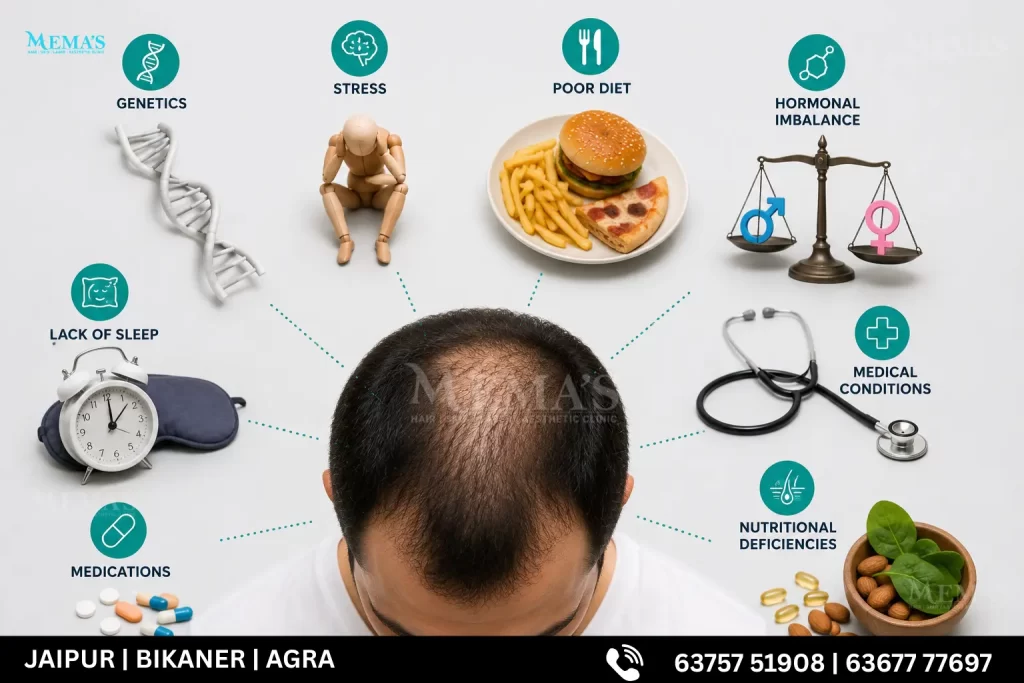
Hair loss rarely has a single, simple cause. Several factors can contribute, sometimes overlapping:
- Genetics (Androgenetic Alopecia): The most common cause in both men and women. A family history of pattern baldness increases the likelihood of experiencing it yourself.
- Hormonal Changes: Fluctuations related to pregnancy, childbirth, menopause, thyroid disorders, or polycystic ovary syndrome (PCOS) can all affect hair density.
- Nutritional Deficiencies: Low iron, vitamin D, zinc, or protein intake can weaken hair growth cycles.
- Medical Conditions: Autoimmune conditions like alopecia areata, scalp infections, and certain chronic illnesses can cause hair loss.
- Medications: Some medications, including certain blood thinners, antidepressants, and chemotherapy drugs, list hair thinning as a side effect.
- Stress and Lifestyle Factors: Chronic stress, poor sleep, smoking, and crash dieting can all contribute to shedding.
- Hairstyling Practices: Tight hairstyles, excessive heat styling, and harsh chemical treatments can cause traction alopecia over time.
- Aging: Hair naturally thins with age as the growth cycle slows and follicles shrink.
- Environmental Factors: Pollution, hard water, and excessive sun exposure are often discussed anecdotally, though their direct role is less established in clinical literature compared to genetic and hormonal factors.
Because so many of these causes overlap, a hair specialist in Jaipur will typically ask detailed questions about your medical history, family history, diet, and lifestyle before suggesting any next step. Identifying the underlying cause is often more important than the treatment itself, since some forms of hair loss respond to medical management alone, without any surgical intervention.
3. Who Can Benefit from Hair Restoration
Hair restoration, particularly a surgical option like FUE hair transplant, is not the right fit for everyone, and a responsible clinic will say so clearly. Broadly, people who may be reasonable candidates include those who:
- Have stable androgenetic alopecia with identifiable areas of thinning or baldness and adequate donor hair at the back or sides of the scalp
- Have realistic expectations about what restoration can and cannot achieve
- Are in general good health, without medical conditions that would make a minor surgical procedure risky
- Have hair loss that has been evaluated and is not being driven by an active, untreated medical condition (such as an autoimmune flare) that should be addressed first
- Understand that results take time to appear and continue to develop over several months
On the other hand, people with very early or still-progressing hair loss, insufficient donor density, certain scalp conditions, or unrealistic expectations about outcomes may be better served by non-surgical approaches, at least initially. This is exactly why suitability is never assumed — it is assessed. A hair transplant consultation near me, done properly, should always begin with this honest evaluation rather than an immediate recommendation for surgery.

4. What Is FUE Hair Transplant
FUE stands for Follicular Unit Extraction, one of the most widely used modern hair transplant techniques. In simple terms, it involves removing individual hair follicles — usually from the back or sides of the scalp, where hair tends to be more resistant to the hormonal process that causes pattern baldness — and relocating them to areas experiencing thinning or baldness.
The process happens at the level of the “follicular unit,” which is a naturally occurring cluster of one to four hairs along with their associated sebaceous gland, tiny muscle, and nerve supply. Instead of removing a strip of scalp tissue (as in the older FUT — Follicular Unit Transplantation — method), FUE uses a small, specialized punch tool to extract these individual units one at a time.
This distinction matters for a few reasons:
- No linear scar: FUE leaves small, dot-like marks scattered across the donor area rather than a single linear scar, which is why it’s often preferred by people who like to keep their hair very short.
- Precision: Because each follicular unit is extracted individually, the surgeon has fine control over which follicles are used and how they are placed.
- Recovery pattern: FUE generally has a different recovery experience compared to strip-based methods, though every patient heals differently.
It’s worth being clear here: FUE is a well-established, medically recognized technique, but it is still a surgical procedure with its own set of considerations, limitations, and possible complications. It is not a shortcut and it is not risk-free. Any clinic offering an FUE hair transplant in Jaipur should walk you through these realities in detail before you commit to anything.
5. Benefits of FUE Hair Transplant
When performed on a suitable candidate by a qualified team, FUE offers several potential advantages:
- Minimally invasive approach: No large incision or stitches are typically required, since individual follicles are extracted rather than a strip of tissue.
- Natural-looking distribution: Because follicular units are transplanted individually and can be angled to match natural hair growth direction, results — when they occur as expected — tend to look integrated into the existing hairline.
- Flexibility for short hairstyles: The absence of a linear scar means many patients can keep their hair short in the donor area without visible marks.
- Use of natural donor hair: Since the procedure relocates the patient’s own hair follicles, there is no synthetic material involved.
- Established technique: FUE has been performed and studied for years, giving both patients and practitioners a reasonable body of clinical experience to draw from.
6. Hair Transplant Procedure Step by Step
Understanding the general flow of an FUE procedure can help ease some of the uncertainty that naturally comes with considering any surgical process. While specifics vary by clinic and by patient, the general steps typically include:
Step 1: Initial Evaluation and Planning The scalp is examined, donor and recipient areas are assessed, and a treatment plan — including the expected number of grafts — is discussed.
Step 2: Preparation The donor area is trimmed (the extent depends on the technique and clinic protocol), and the scalp is cleaned. Local anesthesia is administered to numb both the donor and recipient areas.
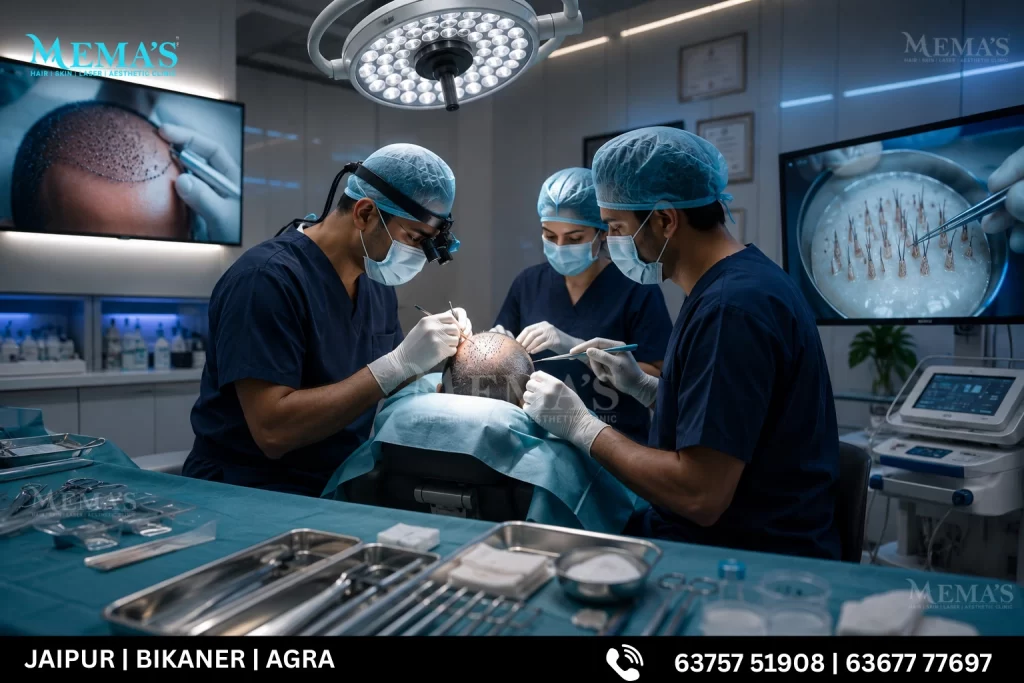
Step 3: Follicle Extraction Individual follicular units are extracted from the donor area using a fine punch tool, one at a time.
Step 4: Graft Storage Extracted grafts are carefully stored in a specialized solution to keep them viable while extraction continues and until they are ready for implantation.
Step 5: Recipient Site Creation Tiny incisions or sites are made in the balding or thinning area, with careful attention to angle and direction so that regrown hair will look natural.
Step 6: Graft Placement The extracted follicular units are placed into the recipient sites, one by one, following the planned density and pattern.
Step 7: Post-Procedure Instructions Once the procedure is complete, the scalp is cleaned and the patient receives detailed aftercare instructions, along with information about follow-up visits.
The full session can take several hours depending on the number of grafts required, and it is usually performed on an outpatient basis, meaning you can typically go home the same day. Throughout this process, comfort and safety protocols matter as much as technical skill, which is why the environment and team experience should factor heavily into your decision.
7. Consultation Process at Memas Clinic
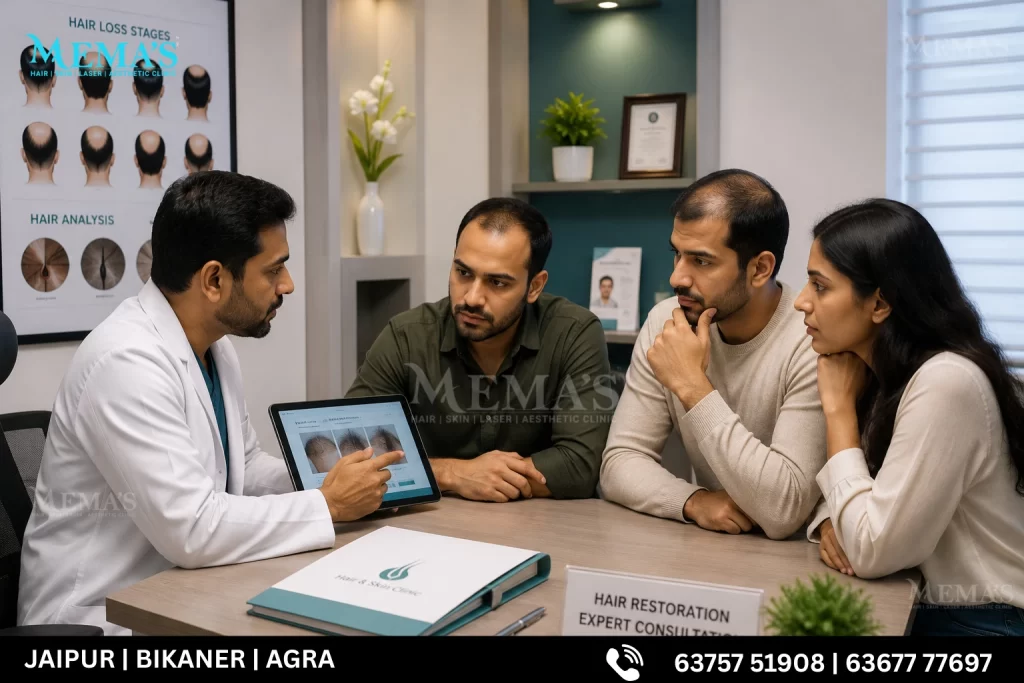
At Memas Clinic, the consultation is treated as the most important part of the entire journey — not a formality before booking a procedure. A typical consultation involves:
- Detailed History Taking: Questions about when hair loss started, family history, medical conditions, medications, and lifestyle factors.
- Scalp and Hair Examination: A physical assessment of the pattern, extent, and stage of hair loss, along with an evaluation of donor area density and quality.
- Discussion of Findings: An honest conversation about what is actually happening with your hair and scalp, including whether the cause appears to be genetic, hormonal, nutritional, or something else that may need separate medical attention.
- Explanation of Options: Depending on findings, this may include surgical options like FUE, non-surgical treatments, lifestyle and nutritional guidance, or a combination.
- Realistic Expectation Setting: A clear conversation about what can realistically be expected, including limitations, so that any decision you make is genuinely informed.
- Questions and Answers: Time for you to ask anything — costs, timelines, risks, aftercare — before making any decision.
We deliberately avoid pressuring anyone into same-day decisions. Hair restoration is not an emergency procedure, and taking time to think it over, ask a second opinion, or simply sit with the information is always encouraged. If you’re searching for a hair restoration consultation that prioritizes clarity over sales pressure, this is the approach you should expect from any clinic you choose — ours included.
8. Recovery Timeline
Recovery from an FUE hair transplant unfolds gradually, and understanding the general timeline can help set realistic expectations. Please note that individual healing varies, and your care team will give you a timeline specific to your case.
- Days 1–3: Mild swelling, redness, and tenderness in both donor and recipient areas are common. Tiny scabs may form around the transplanted grafts.
- Days 4–7: Scabbing typically begins to flake off naturally. It’s important not to pick at scabs, as this can dislodge grafts.
- Weeks 2–4: Most visible scabbing resolves. It is common — and expected — for some or most of the transplanted hairs to shed during this period. This is often called “shock loss” and is a normal part of the process, not a sign of failure, because the follicle beneath the surface generally remains intact.
- Months 2–3: The scalp settles, and follicles that shed earlier begin their next growth cycle.
- Months 3–6: New hair growth typically becomes visible, starting fine and gradually thickening.
- Months 6–12: Hair density continues to improve gradually as more follicles cycle into active growth.
- Around 12–18 months: This is generally when a fuller picture of results emerges, though continued subtle improvement can occur beyond this point too.
This timeline underscores an important point: hair transplant results are not immediate. Patience and consistent follow-up with your care team matter as much as the procedure itself.
9. Post-Procedure Care
Proper aftercare significantly influences how smoothly your scalp heals and how well transplanted follicles establish themselves. General post-procedure guidance often includes:
- Follow washing instructions precisely: Your clinic will tell you when and how to first wash your scalp, usually with a gentle, specified technique to avoid dislodging grafts.
- Avoid touching or scratching the treated area: Even mild scratching can disturb healing grafts.
- Sleep with your head elevated for the first several nights to help reduce swelling.
- Avoid strenuous exercise and heavy sweating for the period recommended by your clinic, typically one to two weeks.
- Stay out of direct sun on the scalp, and avoid swimming pools, saunas, and steam rooms until cleared by your care team.
- Avoid alcohol and smoking during initial recovery, as both can impair healing.
- Take medications exactly as prescribed, including any antibiotics or anti-inflammatory medication.
- Attend follow-up appointments, which allow your care team to monitor healing and address any concerns early.
Every clinic’s specific protocol may differ slightly, so always follow the exact instructions given by your treating team rather than generic advice found online.
10. Expected Results
This is an area where honesty matters more than almost anything else. Results from an FUE hair transplant depend on many individual variables, and no responsible clinic can promise a specific outcome in advance.
What can generally be said, based on how the procedure works biologically:
- Transplanted follicles, when they successfully establish themselves, tend to continue growing hair using the same growth characteristics they had in the donor area.
- Visible improvement is gradual, not immediate, unfolding over many months as described in the recovery timeline above.
- Results are influenced by the skill of the technical team, the patient’s donor hair quality, adherence to aftercare, and individual healing response.
- Hair loss that continues in untreated, non-transplanted areas over time (since androgenetic alopecia is a progressive condition) may affect the overall look of results in the years following a procedure, which is why some patients choose to combine surgical restoration with ongoing medical management of hair loss.
We will not tell you that results are guaranteed, permanent, or universal, because that would not be medically honest. What we can offer is a transparent process, technical care, and a realistic conversation about probability and expectation based on your specific evaluation.

11. Factors Affecting Results
Several factors influence how a hair transplant turns out, including:
- Donor Area Quality: The density, thickness, and health of hair in the donor zone directly affects how much can be safely harvested.
- Extent and Pattern of Hair Loss: More advanced or unusually patterned hair loss can be more complex to address.
- Scalp Characteristics: Skin elasticity, scalp laxity, and overall scalp health can affect graft placement and healing.
- Technical Precision: How carefully follicles are extracted and placed affects graft survival.
- Patient Health: Conditions like uncontrolled diabetes, certain autoimmune diseases, or smoking can affect healing.
- Aftercare Compliance: Following post-procedure instructions closely supports better graft survival.
- Ongoing Hair Loss: Since pattern hair loss is progressive, continued thinning in untreated areas can influence the long-term appearance of results.
- Individual Healing Response: Every person’s biology responds somewhat differently, even under identical technical conditions.
Because these variables are numerous and interconnected, predicting an exact outcome before a full evaluation simply isn’t medically responsible — which is why we emphasize consultation over quick promises throughout this guide.
12. Hair Care Tips
Whether or not you pursue a hair transplant, general hair health habits can support whatever hair you currently have:
- Be gentle when washing and drying hair — avoid vigorous towel-rubbing.
- Use a mild, sulfate-free shampoo suited to your scalp type.
- Limit heat styling and always use a heat-protectant product when you do style with heat.
- Avoid tight hairstyles that pull consistently on the same hairline area.
- Eat a balanced diet rich in protein, iron, zinc, and vitamins, since hair health is closely tied to overall nutrition.
- Manage stress where possible, since chronic stress is linked to certain types of hair shedding.
- Avoid excessive chemical treatments like frequent coloring, perming, or relaxing.
- Protect your scalp from prolonged sun exposure.
- Don’t ignore sudden or unusual shedding — early evaluation by a hair specialist in Jaipur can identify treatable causes before they progress.
These habits won’t reverse genetic hair loss on their own, but they support a healthier scalp environment overall, whether you’re managing existing hair or recovering from a procedure.
13. Myths vs Facts About Hair Transplant
Myth: A hair transplant looks obviously fake. Fact: When performed with attention to natural hair direction, angle, and density planning, and given adequate time for growth, transplanted hair is generally designed to blend in with existing hair. Outcomes still vary by individual case.
Myth: Transplanted hair falls out permanently after some years. Fact: Hair follicles moved from genetically resistant donor areas generally retain their original growth characteristics, though this isn’t an absolute guarantee for every individual case, and surrounding non-transplanted hair can continue to change over time due to ongoing pattern hair loss.
Myth: Hair transplant results are visible immediately. Fact: As covered in the recovery timeline, meaningful visible growth typically takes several months to over a year to fully develop.
Myth: Anyone can get a hair transplant regardless of hair loss stage. Fact: Candidacy depends on donor hair availability, extent of hair loss, and overall scalp and health assessment. Not everyone is a suitable candidate, especially at very early or very advanced stages.
Myth: More grafts always means better results. Fact: Graft number matters, but so does distribution, donor hair quality, and technical placement. A higher graft count does not automatically translate into better cosmetic outcomes.
Myth: The procedure is extremely painful. Fact: Local anesthesia is used during the procedure itself. Some soreness or discomfort during recovery is common but is typically manageable with guidance from your care team.
Myth: Only men experience hair loss and seek transplants. Fact: Women experience pattern hair loss too, and can be candidates for evaluation and, in some cases, treatment, depending on their specific pattern and cause of hair loss.
14. When Should You See a Hair Specialist
It’s easy to dismiss early hair thinning as something minor, but earlier evaluation generally gives you more options. Consider seeing a hair specialist in Jaipur if you notice:
- A gradually receding hairline or widening part
- Increased hair shedding on your pillow, in the shower drain, or on your brush
- Visible thinning at the crown or top of the scalp
- Patchy hair loss or bald spots that appear suddenly
- Hair loss accompanied by scalp itching, redness, or flaking
- Sudden, significant shedding following illness, surgery, or major stress
- A family history of pattern baldness combined with early signs of thinning in yourself
Even if you’re not sure whether what you’re experiencing is “serious enough” to warrant a visit, an evaluation can only clarify things — it doesn’t commit you to any treatment. Many causes of hair loss are far more manageable when addressed early.
15. Questions to Ask Before Choosing a Clinic
Choosing where to go for hair restoration is a significant decision, and asking the right questions upfront can help you evaluate a clinic honestly:
- What are the qualifications and experience of the team performing the procedure?
- Will I have a proper in-person or detailed consultation before any procedure is scheduled?
- What technique will be used, and why is it recommended for my specific case?
- What are the realistic expectations for someone with my hair loss pattern?
- What are the possible risks and complications?
- What does the aftercare process involve, and is follow-up support included?
- Can I see examples of the clinic’s actual work, understanding that individual results vary?
- What is the total cost, and are there any hidden charges?
- What happens if I have complications or concerns after the procedure?
- How many grafts do I actually need, and how is that number determined?
A clinic that welcomes these questions and answers them transparently is generally a better sign than one that rushes you toward booking.
16. Importance of Personalized Hair Restoration
No two scalps, hairlines, or hair loss patterns are identical, which is why generic, one-size-fits-all treatment plans rarely serve patients well. Personalized hair restoration takes into account your specific hair loss pattern, donor hair characteristics, facial structure, age, lifestyle, and long-term goals.
For example, hairline design isn’t just about filling in bald areas — it involves careful planning around your natural hairline shape, the angle at which your hair naturally grows, and how your hair loss is likely to progress over time. Similarly, graft distribution should reflect your specific density needs rather than a standardized template.
This is why the consultation process matters so much. A rushed or superficial assessment simply cannot produce a plan tailored enough to give you the most medically appropriate and realistic outcome for your individual situation.
17. Why Professional Consultation Matters
It can be tempting to research online, watch videos, and arrive at a clinic already certain about what you want. But hair loss is a medical condition, not just a cosmetic concern, and professional evaluation matters for several reasons:
- Accurate Diagnosis: What looks like straightforward pattern baldness could sometimes be linked to an underlying medical condition that needs separate attention.
- Suitability Assessment: Only a hands-on evaluation can determine whether you’re a good candidate for a given treatment.
- Risk Identification: Certain health conditions or medications may affect procedure safety, and these need to be identified beforehand.
- Realistic Planning: A qualified professional can help you understand what’s achievable given your specific donor hair supply and hair loss extent.
- Avoiding Unnecessary Procedures: In some cases, medical or non-surgical treatment may be more appropriate than surgery, and a proper consultation should surface that possibility rather than skip past it.
A hair loss treatment clinic near me search often turns up dozens of options — but the quality of the consultation process is one of the clearest ways to distinguish a responsible provider from one that isn’t.
18. Choosing the Right Hair Transplant Clinic
With so many clinics advertising hair restoration services, choosing the right one can feel overwhelming. Here are factors worth prioritizing:
- Team Qualifications and Experience: Look into the training and experience of the medical professionals actually performing your procedure.
- Transparent Communication: A trustworthy clinic explains procedures, risks, and realistic expectations clearly, without pressure tactics.
- Hygiene and Safety Standards: Proper sterilization, safe procedural environments, and clear safety protocols should be non-negotiable.
- Honest Consultation Process: As emphasized throughout this guide, a genuine evaluation — not a sales pitch — should come first.
- Clear Aftercare Support: Understand what support is available if you have questions or concerns after your procedure.
- Reasonable, Transparent Pricing: Costs should be explained clearly upfront, without hidden charges appearing later.
- Reviews and Patient Experiences: While individual experiences vary, patterns in patient feedback can offer useful context.
- Comfort Level: Trust your own comfort and confidence in the team — you should never feel rushed into a decision.
At Memas Clinic, we built our approach around these exact principles, treating every patient’s journey as a comprehensive hair care process rather than a single transactional procedure.
19. Hair Restoration Options Beyond Surgery
Surgery isn’t the only path forward, and depending on your evaluation, it may not even be the recommended first step. Non-surgical and complementary options that may be discussed during a consultation include:
- Topical Treatments: Certain topical medications are commonly used to help slow hair loss progression and support existing hair, depending on individual suitability.
- Oral Medications: Some oral treatments may be considered for appropriate candidates, always under medical guidance and after discussing potential side effects.
- Nutritional Support: Addressing underlying deficiencies (iron, vitamin D, protein, zinc) can meaningfully help certain types of hair thinning.
- Scalp Health Treatments: Addressing dandruff, inflammation, or scalp conditions can sometimes improve hair retention.
- Lifestyle Modifications: Stress management, improved sleep, and reduced use of damaging hairstyling practices can support healthier hair over time.
- Low-Level Laser Therapy and similar supportive treatments: Some patients explore these as adjunct options; suitability and expected benefit should be discussed individually.
None of these options guarantee specific results either, and their appropriateness depends entirely on the underlying cause and stage of your hair loss. This is, again, why proper diagnosis comes before any treatment recommendation — surgical or otherwise.
20. Frequently Asked Questions
1. Is a hair transplant painful? Local anesthesia is used during the procedure to minimize pain. Some patients report mild discomfort or soreness during the initial recovery period, which is typically manageable with guidance from the care team.
2. Who is eligible for a hair transplant? Eligibility depends on factors like donor hair availability, the extent and pattern of hair loss, overall health, and realistic expectations. This can only be properly determined through an in-person consultation and evaluation.
3. How long does recovery take? Initial surface healing generally occurs within one to two weeks, though the full recovery and growth timeline extends over several months, as outlined earlier in this guide.
4. What exactly is FUE hair transplant? FUE (Follicular Unit Extraction) is a technique where individual hair follicles are extracted from a donor area and transplanted into areas of thinning or baldness, without removing a strip of scalp tissue.
5. Will transplanted hair eventually fall out? Transplanted follicles typically experience a temporary shedding phase within the first few weeks after the procedure, which is a normal part of the process. The follicle itself generally remains and re-enters a new growth cycle in the following months.
6. How many grafts will I need? The number of grafts required depends on the extent of hair loss, desired density, and donor hair availability. This number is determined individually during a consultation, not through a generic formula.
7. How should I prepare for a hair transplant? Preparation typically includes following pre-procedure instructions from your clinic, which may involve avoiding certain medications, alcohol, and smoking beforehand, and arranging for someone to accompany you.
8. Can women undergo hair restoration treatment? Yes, women can experience pattern hair loss and may be candidates for evaluation and, depending on individual findings, various treatment options including surgical or non-surgical approaches.
9. How long does the procedure itself take? Procedure duration varies based on the number of grafts required, often ranging from several hours to a full day for larger sessions.
10. Is a consultation really necessary before booking a procedure? Yes. A proper consultation is essential to determine candidacy, discuss realistic expectations, identify any health considerations, and create a personalized treatment plan.
11. Are the results of a hair transplant permanent? No responsible clinic can promise permanent or guaranteed results. Transplanted follicles generally retain characteristics from the donor area, but individual outcomes vary, and ongoing hair loss in non-transplanted areas can affect long-term appearance.
12. What is the difference between FUE and FUT? FUE involves extracting individual follicular units, leaving small dot-like marks, while FUT involves removing a strip of scalp tissue, which typically leaves a linear scar. Each has different considerations depending on the individual case.
13. Are there risks involved in a hair transplant? As with any surgical procedure, there are potential risks, including infection, scarring, or graft survival issues. These should be discussed thoroughly during your consultation.
14. When will I see visible results after a hair transplant? Visible growth generally begins around three to six months post-procedure, with continued gradual improvement over the following months, often extending to around 12 to 18 months for a fuller picture.
15. Can I combine a hair transplant with other treatments? Some patients combine surgical restoration with medical or non-surgical treatments to help manage ongoing hair loss in non-transplanted areas, based on their individual consultation.
16. Does insurance cover hair transplant procedures? Hair transplant procedures are generally considered cosmetic and are typically not covered by standard health insurance, though this can vary, so checking directly with your provider is recommended.
17. What should I look for in a hair transplant clinic? Look for transparent communication, qualified and experienced professionals, proper hygiene standards, a thorough consultation process, and honest expectation-setting rather than guaranteed promises.
18. Is Memas Clinic available in cities other than Jaipur? Yes, Memas Clinic serves patients through branches in Jaipur, Bikaner, and Agra.
21. Conclusion
Hair loss is common, and for many people, it eventually raises real questions about whether — and how — to address it. There is no single right answer for everyone. Some people find that non-surgical approaches and lifestyle changes meet their needs. Others, after proper evaluation, may be good candidates for a procedure like FUE hair transplant. What matters most is that any decision is made with accurate information, realistic expectations, and guidance from professionals who are honest with you, even when the honest answer is more nuanced than a marketing headline.
At Memas Clinic, our goal as a hair transplant clinic in Jaipur, Bikaner, and Agra is to be that honest guide — starting with a thorough consultation, continuing through transparent discussion of your options, and supporting you through recovery if you do move forward with a procedure. We won’t promise you a specific outcome before we’ve even examined your scalp, because that wouldn’t be medically responsible. What we can promise is a process built on genuine evaluation, clear communication, and respect for your decision-making.
22. Visit Memas Clinic
Jaipur Branch 1st Floor, JDA Central Market, S-27, Opp. Amar Jain Hospital, Near Amrapali Circle, Vaishali Nagar, Jaipur, Rajasthan 302021
Bikaner Branch 1st Floor, Near Novelty Opticals, Opp. 16N OPD, PBM Hospital, Bikaner, Rajasthan 334001
Contact Us: 63757 51908 | 63677 77697
If you’re considering a hair transplant consultation near me, or simply want an honest evaluation of your hair loss, we welcome you to reach out and start the conversation — no pressure, no guaranteed promises, just a clear and professional discussion of your options.
This article is intended for general educational purposes only and does not constitute individual medical advice. Suitability for any hair restoration treatment, surgical or non-surgical, can only be determined through an in-person consultation and evaluation by a qualified professional.